
Overwintering Pelargoniums Indoors: A UK Grower's Guide
Save your geraniums year after year. A practical UK guide to lifting, pruning, and overwintering pelargoniums on a windowsill — no greenhouse needed.
This article contains affiliate links. We may earn a commission at no extra cost to you.
Quick Summary
Save your geraniums year after year. A practical UK guide to lifting, pruning, and overwintering pelargoniums on a windowsill — no greenhouse needed. A practical, UK-specific method for overwintering pelargoniums (geraniums) on a windowsill — including the right time to lift, the correct prune, the watering schedule from October to April, and how to bring plants back into vigorous spring growth.
Introduction
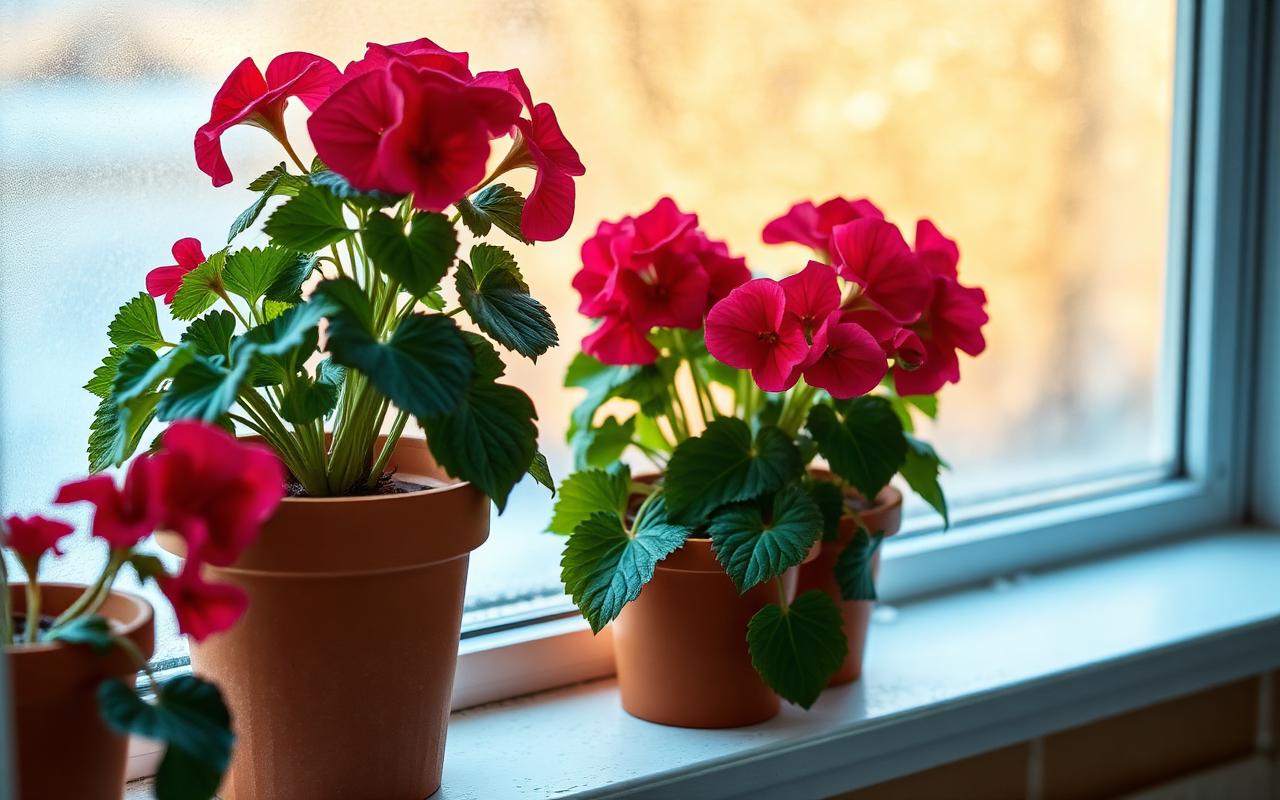
Pelargoniums (commonly called geraniums) are not hardy in the UK — a single hard frost will kill them outdoors. But every year, thousands of gardeners bin healthy plants in October that could easily live for 5–10 years if overwintered correctly. The good news: you don't need a heated greenhouse. A bright windowsill, the right prune, and a careful watering schedule are all it takes. This guide is the exact method we use at Home Gardening Pedia, refined over multiple UK winters.
When to Lift Your Pelargoniums
The trigger date is when night temperatures regularly drop below 5°C — typically late September in northern England and Scotland, mid-October in the south, and right at the end of October in coastal and London gardens. Don't wait for a frost warning; pelargoniums are damaged by cold long before they freeze, and the leaves will start yellowing as a warning. Lift on a dry day so the rootball isn't waterlogged going into storage.
The Lift-and-Prune Method
Water lightly the day before
Slightly damp soil holds together when you lift, but isn't so wet that it triggers rot in storage. Skip this step entirely if rain is forecast.
Lift the whole plant with rootball
Use a hand fork to ease the plant out without snapping the woody stems. Shake off about a third of the soil to reduce weight and disease pressure.
Prune hard — cut by half to two-thirds
This is the step most people get wrong. Cut every stem back hard, leaving only short stubs with at least 2–3 leaf nodes. Hard pruning is essential for healthy spring regrowth.
Strip remaining leaves
Remove all leaves, including any flowers and buds. The plant needs to enter dormancy, not keep growing.
Repot into fresh compost
Use a small pot — just slightly bigger than the trimmed rootball. A peat-free multi-purpose compost mixed 50:50 with horticultural grit gives the perfect drainage.
Place on a bright, cool windowsill
Aim for 5–10°C with as much light as possible. A north-facing or unheated bedroom windowsill is ideal — too warm and the plant will try to grow weakly.
Winter Care: October to March
- ✓ Water sparingly — once every 3–4 weeks is usually enough
- ✓ Only water when the top 3cm of compost is bone dry
- ✓ Never let water sit in the saucer — empty after 10 minutes
- ✓ Pinch off any sad-looking yellow leaves as they appear
- ✓ Check weekly for grey mould (botrytis) and remove affected stems immediately
- ✓ Do NOT feed at all during the dormant period
Bringing Them Back in Spring
From early March, gradually move plants to a brighter, warmer spot and increase watering. You'll see new buds breaking from the woody stems within 2–3 weeks. Start a weekly half-strength tomato feed in late March to encourage strong, flowering growth. Pot on into fresh compost in a slightly larger container in early April. Don't move plants outdoors until all risk of frost has passed — typically mid to late May in the UK, even later in Scotland and northern England.
Two Alternative Methods
Bare-Root Storage
Lift the plant, shake off all soil, hang upside down in a cool, frost-free shed or garage. Re-pot in March. Works brilliantly for zonal pelargoniums but riskier for ivy-leaved varieties.
Cuttings in August
Take 8–10cm cuttings in late August, root in gritty compost, and overwinter the small cuttings rather than the parent plant. Saves space and gives you free new plants.
Best Kit for Overwintering Pelargoniums
The right gear makes overwintering far more reliable. Four products we recommend specifically for this job: Westland Houseplant Compost (free-draining, ideal for the lift-and-pot method), Burgon & Ball RHS Pruning Snips (clean cuts that heal faster, reducing rot risk), GardenSkill Heavyweight Horticultural Fleece (for late-October emergency frost protection if you can't lift in time), and a basic XLUX T10 Moisture Meter (the single best tool to stop overwintering rot — you only water when it reads 'dry'). Together these four cost less than replacing 3–4 plants in spring.
Shop Overwintering EssentialsCommon Overwintering Mistakes
- ✗ Leaving plants outdoors until the first frost — damage starts much earlier
- ✗ Skipping the hard prune (the #1 cause of weak, leggy spring plants)
- ✗ Overwintering in a warm, centrally-heated room (causes weak growth and aphids)
- ✗ Watering on a fixed schedule instead of checking the soil
- ✗ Using a pot that's too big — wet compost around dormant roots causes rot
- ✗ Bringing plants outdoors too early in spring before frost risk has passed
Recommended Buying Guides
Looking for the right products? These guides have you covered:
Browse Seasonal on Amazon"The single biggest mistake I see is gardeners being too gentle with the prune. A pelargonium cut back to a 10cm woody stub looks shocking in October, but it'll be twice as bushy and floriferous next summer compared to one left long."
— James Thornton, Home Gardening Pedia
Frequently Asked Questions
Can I overwinter pelargoniums in an unheated greenhouse in the UK?
Only if you can guarantee it stays above 2°C and you cover plants with double-layer fleece on cold nights. Most UK unheated greenhouses are too risky in January and February — a windowsill is more reliable.
Why are my overwintered pelargoniums leggy and pale?
Almost always too warm and too dark over winter. Pelargoniums need cool (5–10°C) and bright conditions to stay compact. Move them to a cooler, brighter spot and prune back hard in March.
Do I need to feed pelargoniums during winter?
No — never. Feeding dormant plants encourages weak, soft growth that's vulnerable to disease. Start feeding only when active growth resumes in late March.
How long do pelargoniums live if overwintered properly?
Easily 5–10 years, and we know growers with parent plants over 20 years old. Each year you can take cuttings to refresh the stock and give plants away.
Can I leave pelargoniums in their summer pots over winter?
Yes if the pot is small enough — but most summer planters are too big and hold too much wet compost, which causes rot. Repotting into a smaller pot is far safer.
Is it too late to overwinter pelargoniums after the first frost?
Often yes for outdoor plants, but check carefully — if only the top growth is damaged and the woody stems still look firm and green inside when scratched, you can prune hard and try anyway.
Written by
James Thornton
Tools & Equipment Editor
James tests and reviews garden tools and power equipment. With a background in landscape design, he brings a practical, hands-on approach to every review.
Related Articles
A Month-by-Month Garden Checklist
Never miss a seasonal task again. Your complete monthly guide to sowing, pruning, feeding, and protecting your garden year-round.
The Complete Spring Garden Preparation Guide
Get your garden ready for the growing season with this comprehensive spring preparation checklist and timeline.
Summer Watering: How Much, How Often, and When
Master the art of summer watering to keep your garden thriving through heat waves without wasting water.